
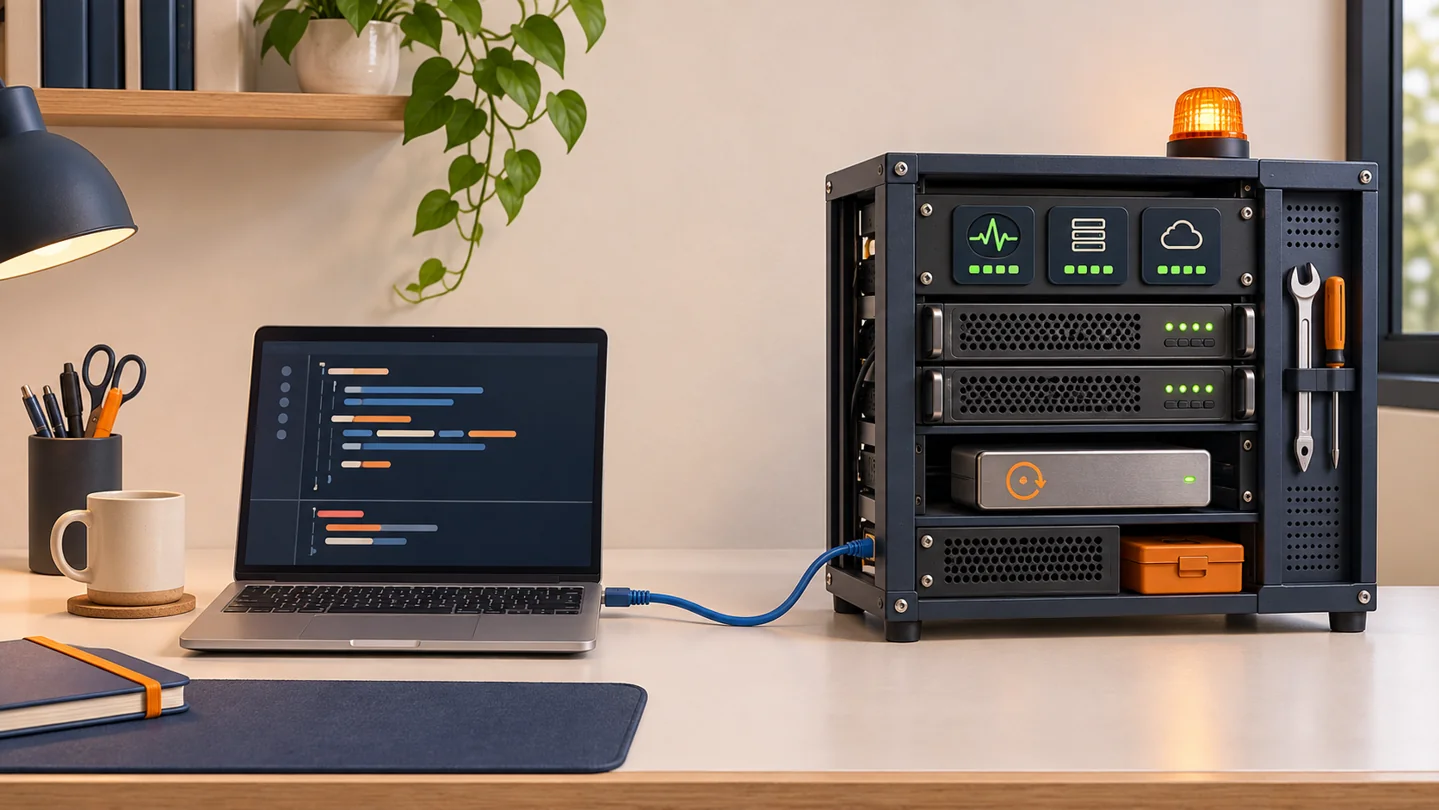
Asking AI to write code makes sense for cleaning an Excel file, renaming files or prototyping with sample data. Once the same tool handles customer data, faces the internet or becomes part of a business process, the job changes. You need a capable developer or team. Their answer to how they will detect a failure and restore service tells you far more than how fast they write code.
What is vibe coding, and when is it useful?
With vibe coding, you describe what you want in everyday language, let AI write the code and refine your instructions based on the result. It makes an idea tangible quickly. You can see what fields a screen needs, try two workflows or automate your Friday routine without a long development cycle.
Start by renaming files in a copied folder, building a report with synthetic samples or trying a form with dummy records. You can limit the harm and check results yourself. For a converter, prepare three small samples, specify expected output and run it on a copy. On failure the tool should stop and name the record it could not process.
The time savings should hold up after you adopt the automation. A script that quietly produces wrong results when the input format changes can undo the gain. Define rules such as ‘if the date is blank, skip the row and record it in the report’. Test bad, empty and duplicate records. When volume makes manual checking impractical, the need for verification grows.
When can you build it yourself, and when do you need help?
‘It’s just a form’ or ‘only two people use it’ tells you little about risk. A form can store private customer details. An automation used by two people can change stock every night. Decide based on the data, access and business impact. Start here: if it fails one day, who loses what and who notices?
| Need | Typical risk | Where to start |
|---|---|---|
| Organising files on your computer | Wrong names, wrong formats or a lost copy. | Preview, copied data and a separate output folder. |
| Trying a screen or business idea | A sample workflow falls short in actual use. | Prototype with synthetic records and get user feedback. |
| Internal automation used by employees | Commercial data reaches the wrong person or a transaction runs twice. | Review access, operation boundaries and rollback technically. |
| Internet-facing customer portal | Access control errors, data loss, downtime or incorrect customer-facing results. | Plan security, testing and operations with a capable developer or team. |
Keep the impact small as well as the screen count. A tool summarising supplier quotes can produce a draft before sending any emails. A warehouse integration can flag discrepancies before changing stock. When the human decision remains visible, you can measure the value without setting hard-to-reverse transactions in motion on the company’s behalf.
How do KVKK, commercial data and sensitive information change the decision?
Map the flow of names, contact details and any other data linked to a person. Where is it stored and which staff can see it? Do emails, logs, backups and the AI service receive it too? Türkiye’s Personal Data Protection Authority explains that controllers must take technical and organisational measures appropriate to the personal data processed. Which measures fit depends on the data and processing. Turkish data security obligations under KVKK
Commercial data may need protection even when it isn’t personal. Think discounts, cost tables, bids and customer quotes. Before pasting live records into AI, learn which tools your organisation allows for which data. Fictional customers and prices often answer the same prototype questions. When data must go downstream, establish recipient, access, retention and owner in advance.
A login verifies identity. Each request still needs a check of which records the user may read or change. In a portal shared by two companies, specify and test that each can see only its own quotes. Use a verification framework such as OWASP ASVS for authorisation, session management and other controls. OWASP Application Security Verification Standard
The real work begins after launch
Suppose the portal goes live on Monday and a library gets a security update the next Monday. How does the developer hear about it and check whether you use the affected version? Where will they test it? How will they roll back if login or approvals break? A week is just an example. You need an owner and a working process whenever the update arrives.
Even if your code stands still, browsers, payment APIs, OS packages and user load can change. Some faults appear only at peak times, others when an email or integration queue quietly backs up. Version tracking, alerting and repair belong in regular development. NIST Secure Software Development Framework
- Detect
Advisory, affected version and owner - Test
Test environment and critical journeys - Deploy
Deployment and rollback plan - Verify
Live metrics and transaction checks
Monitor resources and critical workflows
Track user outcomes alongside CPU, memory, disk, database connections and service costs. The home page may load while notifications remain stuck. At handover, know what each health signal measures, the alert threshold and who is notified. A customer’s call as your first alert may come too late.
Fix bugs so they stay fixed
‘The screen looks right’ is a weak acceptance criterion. Identify the input, role or legacy record that triggers the defect. A test that reproduces it before the fix can verify expected behaviour afterwards. Check other workflows sharing the module so today’s change does not undo a rule the team has forgotten.
Verify backups by restoring them
A backup can look successful while required files or configuration are missing. Use a test environment to measure how far back you can restore and how long work takes to resume. Include uploaded files, settings and team access along with the database. Agree what data loss and downtime the business can accept. CISA backup and recovery guidance
Separate production from testing
Development and test copies should work without live customer data. When environments mix, a simple test can contact a real customer or change a commercial record. Represent pending records, missing fields, multiple roles and legacy data alongside success cases. Document what unit, integration and end-to-end tests verify in critical areas so you can locate failures quickly.
Automated results are only part of release verification. Check that connections target the right environment, secrets are managed through the relevant service and backups run on schedule. In the new release, trace one small transaction. When a quote is approved, the screen status, database record and notification should agree. Repeat after rollout on the most important workflows.
Write down who does what for the first security update
When an advisory arrives, identify the version you run and where the component is deployed. Prioritise by business impact. Test separately, verify critical transactions and monitor production. If the update changes the data schema, plan rollback explicitly. Reverting application files does not itself restore the database.
Update schedules and outage tolerance vary. A system taking orders continuously needs a different release window from a weekly internal report. Establish whom to contact, who decides and who checks the update’s impact. If the procedure works when the original developer is unreachable, your operational plan is more mature.
What should you expect from a capable developer or team?
I would ask how the developer will preserve behaviour when adding a feature three months from now. Counting how many screens they can produce for a proposal tells me little. A new pricing rule must preserve old quote totals. A new notification channel must not send old emails twice. A developer who understands why a rule exists turns these cases into requirements and tests.
Apply that thinking to integrations. When a service slows down, does the operation wait or show an error? Can retrying create it twice? Who notices when a provider retires an API version? Solutions vary. Clearly specifying and testing expected behaviour tells you more about quality than the size of the project.
At handover, make source code, setup, deployment, services and account management, test commands and incident contacts clear. A new developer should be able to reproduce a failure, stage a fix and safely roll back. At proposal stage, ask who owns maintenance, security updates and incident response in writing. Guide to evaluating software proposals
AI can speed up drafting code, thinking through test scenarios and editing documents. Experienced developers set the boundaries and verify results. A good team makes data and operational risks visible when handing over an online system. Explaining what happens on failure shows it is planning beyond the demo. Testing and quality for AI-written code
Recognise when a prototype becomes a real system
Imagine a sales team. In week one, an employee gets a local script to summarise fake quotes. In week two, the team wants real quotes. Then the customer portal needs to show the summary and send it to ERP on approval. The screen can look much the same while permissions, retention, retries and record accuracy matter more at every step.
I’d extract the business rules learned in the prototype, then ask for written answers. Who sees which records? What happens to a prior quote when prices change? What state remains if a service times out? What if a request arrives twice? Which data is authoritative? Answers can become tests, an integration contract and operating notes. AI can still assist while the team takes technical ownership.
What should a maintenance proposal specify?
Go beyond ‘support included’. Ask what is monitored, how alerts are handled and when non-urgent changes go out. Check how the last successful backup and restore drill are recorded. Clarify which updates are routine, how new features are planned and who pays third-party fees.
A day of downtime may cost the business very differently from several hours of disruption. Plan accordingly. If approvals stop, can staff temporarily work by hand and later reconcile those records? Software continuity depends on the developer’s decisions and on people inside the company knowing their roles.
Run an incident drill before launch
Simulate a customer approval whose notification never arrives. Can the team spot it on the dashboard, identify the stuck step and affected users, and say whether retrying is safe? Try the tools and access with another developer. If instructions work only on the first developer’s computer, handover is incomplete. Add findings to the backlog so a real outage follows rehearsed steps.
Sometimes the best pre-launch investment is to plan recovery for a current workflow instead of adding a feature. Being able to switch a feature off, tell customers what happened and reach the person who restores service has direct business value. Keep small automations narrow to reduce the burden. Put these tasks early in the production plan.
Quick decision summary
- Prototype with AI for small, reversible tasks you can verify on copied data.
- Define ownership and access boundaries as impact on data, users and transactions grows.
- For online business systems, assign a team to testing, monitoring, backups, updates and incident response.
- At proposal and handover, review maintenance and transition alongside the demo.
Frequently asked questions
Can I build software with AI without knowing how to code?
Yes. Describe and try small tools or prototypes. Use copies and start with work you can verify yourself.
Do I need a developer for an online application?
If it stores customer data, grants account access or performs business-critical actions, assign an experienced developer or team. Define pre-launch checks and technical ownership after launch together.
Can I give an AI tool real customer data?
First assess the data, your organisation’s policies and how the tool provider processes it. Synthetic records usually suffice for design and prototyping.
Is a vibe-coded prototype disposable?
It can clarify workflow and scope. A developer should inspect the code and decide which parts can be tested and reused and which need rework.
What should I ask about in a maintenance agreement?
Ask about monitoring, restore drills, security updates, fault reporting and response, dependency and integration tracking, and how new features are priced.